I've worked in the Undergraduate Admissions Office at Penn State for more than ten years now. In that time, I have had the distinct honor and pleasure of presenting to students, families, and high school counselors about the college search process - and Penn State specifically. Giving presentations has long-been one of my favorite parts of the gig, but with the whole world working remotely these days, we have had to move our presentations into a virtual format. With all of the other things that have been swirling about, I have not had the opportunity to give any presentations in the last couple of weeks.

The Penn State admissions community hosted a webinar on Thursday last week and invited high school counselors from around the Commonwealth of Pennsylvania - and beyond - for a question-and-answer session regarding the impacts of COVID-19.

Yours Truly got to host the event (yay!), and hopefully provide some clarity for our partners in the counseling community. Here's a screenshot of the beginning of the presentation:
That's me, in my living room, in the upper-right-hand corner of the screen

We covered a whole host of topics ranging from where people can find resources and information about how Penn State is responding to the coronavirus pandemic to how schools moving to a pass/fail grading system for spring semester will have impacts on this year's seniors (as well as juniors, sophomore, etc. for the coming years).

Look, the remainder of this admissions cycle is going to be tough for students, families, and high school counselors (not to mention those of us on the higher ed side of the desk). The overall message that I tried to convey to our counseling colleagues was that - regardless of circumstances - we want to work with students in being flexible. We know that things are strange right now, and likely will be for some time to come.

We ended on an open Q&A forum for the counselors so that folks could ask whatever they wanted. It is my hope (and the shared hope of my colleagues that participated with me) that the webinar was helpful, even if the answers to several of the questions was, "I don't know, but we're working on it".

Our team will be hosting another event this coming week and it is my hope that we'll have even more answers to the questions posed by our friends "across the desk".


Read More …

Categories: , ,

The Admissions Dude Mobile Command Center
Today was my first day working remotely as a result of COVID-19, and it wasn't a disaster Granted, there are still a few minutes left in my workday, but I'm feeling confident that I won't crash and burn today. (but there's always tomorrow!)

As I went about my work, virtual meetings, evaluating applications, and getting affection from Molly Weasley, I thought about the distinct possibility that this could be a long-term thing.

This morning, Penn State released a statement announcing that the remainder of the spring semester courses would be held remotely, and that graduation would not be the traditional ceremony:

UNIVERSITY PARK, Pa. — Based on evolving federal guidance and statewide mitigation plans announced by Gov. Tom Wolf around the growing coronavirus pandemic and the global efforts underway to stop its spread, Penn State has extended the remote-delivery period for all classes through at least the spring semester. Examinations will also be administered remotely. Additionally, spring commencement ceremonies will be postponed while the University explores options for celebrating the achievements of our students. These decisions align with recommendations from the federal government that call for restricting of all gatherings of more than 10 people.

“Graduation is a significant milestone for our students and while it may not be the same as our traditional ceremony, we are committed to finding the best way possible to recognize the achievements of our graduates,” said Penn State President Eric J. Barron. “However, as the world works together to slow the spread of COVID-19, these decisions must be made with public health at the forefront along with the health and wellness of our students, faculty, staff, their families, and our local communities.”

The University will announce soon a schedule for students to return to campus to move out of their on-campus residence halls. It is essential that students know they will not be able to swipe into their on-campus residences until they receive specific information and detailed instructions regarding the schedule. This is critical to the University’s efforts to create as much social distancing as possible and maintain a low level of exposure risk to our students as well as all of our local communities.

“The University will also work with local authorities, landlords, and student leaders, where we can, to develop strategies to minimize the impact of students returning to our communities to retrieve personal belongings,” said Barron. “We encourage all students to be patient as they await further guidance and support.”

Boom. And like that, everything changes in a more long-term way.

While we haven't yet received any direction regarding staff reporting to campus for work - and when that would happen - the statement is more information about how the University will be operating in the near-term. I try to take solace in that. But, for the record, I'm not someone that likes to have a lot of uncertainty in his life. This is amplified even further in my work life.

A college friend of mine works in the service industry. His company has a tasting room in which he spends a bit of his time. Earlier this week, based on everything COVID-related, the company decided to limit the number of people in the tasting room to only two at a time. In my friend's words, "that's good for f**king business".

Indeed.

Needless to say, he's worried about both the immediate and lasting economic effects of the current crisis. More to the point: he's worried about his job. And I am too.

I have come to realize that working in higher education has some serious privileges, not the least of which is the ability to work from my house (and be able to accomplish nearly everything that I am able to do in the office). I wish that everyone had that same ability.

I guess that I should try to focus my attention on the positives right now. My co-workers don't know that I'm wearing pajama pants to meetings. I have a couple of four-legged friends at my ankles while I'm in "the office". I've got this supremely interesting, smart, and attractive woman with whom I'm sharing my workspace (aka, my wife). And - perhaps most of all - I am still employed.

I hope that the events of COVID-19 blow over without major incident, and that you and your family are weathering the proverbial storm in good health.


Read More …


I don't even know how to label this post. Work? Personal? WTF? All of the above?

So, in case you hadn't heard, there has been a lot of activity related to COVID-19 (aka, the Coronavirus) in the past few days. Here at Penn State, like everywhere else, things have gotten hectic with trying to plan for working remotely (at best) or a complete shut-down of the University (at worst).

Last week the University decided to move to a remote learning model for classes, canceled all domestic and international travel, and canceled all on-campus events through April 6th. As you can imagine, those last two items greatly impact the work that we do in the Undergraduate Admissions Office. 

What was not canceled was the day-to-day operation of our office. Even though a majority of our staff are now working remotely, students are still sending email messages, calling in with questions, and submitting applications and related materials. The entirety of my week last week was full of meetings about continuity planning and how we will keep processes flowing for students that have submitted applications for undergraduate admission to Penn State. Not a small task.

Penn State has released any staff that has the ability and can do so to work from home. In all of the flurry of activity, I had not really been worrying about, or even considering the repercussions of COVID-19. 

Over the weekend, a group text with a bunch of my high school buddies started to get some serious activity. One message that came in to the group was particularly striking:


That particular buddy is the vice president of human resources at a large, multi-national corporation (I won't say which one). He's a no-nonsense guy, and isn't one that is prone to hyperbole. He followed that message up yesterday with a forewarning that - according to his sources - there would be a federally-mandated two week quarantine in the United States. You won't be able to leave your house for anything, "only groceries, gas, or pharma".

Dang.

I am not typically the type of person that gets worried about this kind of stuff. Normally I would tell folks to calm down and not worry about stuff. This feels different to me. I'm not freaking out like some, but I definitely find myself making sure that my family has what it needs in case we need to hunker down for a few weeks.

Wash your hands and be smart folks. Unless you need some groceries or are part of the medical profession, or are police/firefighters/EMTs, stay home (and say 'thank you' to the folks in the aforementioned groups!).

Stay healthy, and help others to do the same.


Read More …

Categories: , , ,

Some really interesting information coming out of Gallup a few weeks ago regarding employers accommodating remote work:

[A] 2016 U.S. Government Accountability Office report on federal telework stated that the agencies it studied "had little data to support the benefits or costs associated with their telework programs. All of the selected agencies could provide some supporting documentation for some of the benefits and only two could provide supporting documentation for some of the costs."

Gallup analytics has the data.

And the data are clear: Remote work not only improves outcomes and employee branding but is a policy that the most talented employees desire.

Remote Work Is Becoming More Common

Remote work is on the rise. The number of hours spent working off-site is increasing, as is the number of workers. In 2012, Gallup data showed 39% of employees worked remotely in some capacity, meaning they spent at least some of their time working away from their coworkers. In 2016, that number had grown four percentage points to 43%. And of those who do work remotely some of the time, the percentage of time spent working remotely increased from 2012 to 2016 as well. The Society for Human Resource Management (SHRM) found a threefold increase in the number of companies offering remote work options between 1996 and 2016.

All too often I hear people (read: management) poo-poo the notion of remote work based on the idea that to be effective/productive, one must be present in the workplace. I wholeheartedly disagree, and the data supports me:

Engagement is not an exercise in making employees feel happy -- it's a strategy for better business outcomes. It is true that engaged employees are more enthusiastic, energetic and positive, feel better about their work and workplace, and have better physical health, but engagement isn't a perk for leaders to dole out, it's a way leaders can improve KPIs. As decades of Gallup research shows, when employees are engaged their performance soars: Highly engaged workplaces can claim 41% lower absenteeism, 40% fewer quality defects, and 21% higher profitability.

And job flexibility increases engagement.

Gallup discovered that engagement climbs when employees spend some time working remotely and some time working in a location with their coworkers. Weekly face time with coworkers and managers seems to affect engagement: the optimal engagement boost occurs when employees spend 60% to 80% of their time working off-site -- or three to four days in a five-day workweek. It's worth noting that five years earlier, in 2012, the optimal engagement boost was experienced by workers who spent less than 20% of their time working remotely.

Gallup finds that this group -- those who work remotely 60% to 80% of the time -- is also the most likely of all employees to strongly agree that their engagement needs related to development and relationships are being met. Perhaps counterintuitively, they're also the most likely of all employees to strongly agree that someone at work cares about them as a person, encourages their development and has talked to them about their progress. This group is also the most likely of all employees to strongly agree they have a best friend at work and opportunities to learn and grow.

My emphasis.

The biggest barrier that I have encountered is administration and/or management that hold onto the "traditional" notion of a work environment. They hold a mis-conception that someone "working at home" is sitting around in their pajamas and not getting any work done. But, in our data-driven age, we are able to monitor the productivity of our staff, whether they are in the office or working remotely.

In our unit, I absolutely support working remotely for staff that are full-time exempt employees.

For example, when we are expecting bad weather (which never happens in central-Pennsylvania winters), I encourage folks to take their laptop home in case they are not able to make it into the office the next day. The same suggestion is made for staff who might be coming down with a cold or the flu. I regularly tell our team that, even if it's only a couple of hours of work that can be accomplished, it's worth it to not fall behind.

Gallup illustrates this well:

chart via Gallup
This is where that "cares about them as a person" comes into play. I would rather someone stay home when their kid is sick, and still feel like they can get some work done. I'd like to think that staff appreciate the flexibility and understand it comes from a place of caring. I know that I appreciate that.

Also, for me personally and somewhat selfishly, I am incredibly productive when I am working at home. No meetings, distractions, or interruptions.

Except for the occasional dog that requests to go outside.


Read More …

Categories:


Ten years ago today I awoke and went to work in the Undergraduate Admissions Office at Penn State's University Park campus for the first time.

I remember it well: it was a really cold February morning. This is clear to me because, as part of my on-boarding at Penn State I had to walk across campus to the HUB to have my photo taken for my staff ID badge:

Look at that youngster!
Having worked at small liberal arts colleges previously, my first day (nay, year?) could certainly have been overwhelming. But, because the Undergraduate Admissions Office was filled with truly excellent people (and still is!), I made short work of getting to know everyone and finding my place among the team.

Initially I was answering telephones, responding to email messages, giving presentations to students and families, and evaluating applications. Since then my work has changed quite a bit.

Nowadays my working hours are filled with meetings, responding to calls and emails from people that are angry, meetings, checking admission decisions, meetings, and helping to guide the vision and strategy of our operation. Wait, did I mention meetings?

All of that said, I still look forward to my work everyday.

So, here we are ten years later (!). Even though I look a bit less cherubic...

Just finished a presentation to 2,500 of my friends - now more application evaluations!

...I still have a passion for the work and the students that we admit and enroll each year. 

Here's to another ten (or twenty?) years!


Read More …

Categories: ,

Scratch that. Let me SHOW YOU...
Each year we try to do a team "thing" for Halloween. For example, last year we went as a set of dominoes. So this year my good pal Wendy thought that superlatives would be a cool idea.

From left to right:
  • Joanne was "Most Likely To Eat Your Chocolate"
  • Sam was "Most Likely To Run A Marathon"
  • Audrey was the "Class Nerd"
  • Liz was "Most Artistic"
  • Wendy was "Most Likely To Be Cold"
  • I went with "Most Athletic" (which was done completely in irony)

While there were a couple of other folks that dressed up, I was somewhat disappointed with the overall turnout. Who wants to pass-up an opportunity to "dress down" at work?!

Read More …

Categories:


Ouch. That's rough. The above image is an actual screen grab from a real email that I received at work.

While I would love to honor this poor student's request and just straight-up deny them, unfortunately that's not how it works (as Rick Clark likes to say).

You see, when a student submits an application for admission to Penn State, we have to evaluate it. We are obligated to do our due diligence and determine if the applicant is qualified for admission to the campus and program to which they have applied. We take very seriously the idea that a student has been thoughtful about their application, and taken the time and effort to complete and submit their best application for admission to our undergraduate programs.

So, as you can imagine, we work with all kind of students and families. It's always great to have applicants that come from families that are all about Penn State. But, I would imagine that, for every student who wants to attend because someone in their family did, there are probably ten students who feel like the one pictured above.

I can practically hear the tension-laden argument while trying to force the student into the family car for a campus visit. "OMG DAD -  I DON'T WANT TO GO TO PENN STATE. What the hell is a Nittany Lion anyway?!"

I get it student, I do. But unfortunately I cannot deny admission to a student who may be qualified. That wouldn't be right. But maybe if I chat with your parents...

So, given that, this part is for the sibling/mom/dad/aunt/uncle/grandparent: lay off of your student. They have enough pressure to deal with during their senior year in high school. They don't need you adding even more by insisting/requiring them to apply to your favored institution of higher education. Be supportive in the choices that your student makes. If they want to visit a list of schools that are the antithesis of your favored school, let them. If they want to spend all of their application fees at schools that you don't approve of, fine. At the end of the day, your student needs to find a school that fits them. Not you.

Think of it this way: when your student is done with college, are you going to dictate the employers where they will apply for jobs?

(if you read that question and even considered a 'yes' answer, then we need to chat privately)

Part of the learning and maturation process in higher education is the opportunity that students have to make their own decisions. They decide when and what they eat. They decide with whom they will be friends. They decide what time they'll go to bed - and when they'll wake up. They decide on a program-of-study, and what classes to take. They decide on an eventual career path.

If you give your student the space to make these decisions on their own beginning in high school, they won't feed the need to email the admissions office asking for a denial letter. And that'll be a plus.


Read More …

Categories: , ,

Attention admissions colleagues; you may want to be careful at the bar. This is an interesting piece of research conducted by the awesome folks at Penn State - in collaboration with the University of Buffalo:

Employees who force themselves to smile and be happy in front of customers — or who try to hide feelings of annoyance — may be at risk for heavier drinking after work, according to researchers.

A team of researchers at Penn State and the University at Buffalo studied the drinking habits of people who routinely work with the public, for example people in food service who work with customers, nurses who work with patients or teachers who work with students.

They found a link between those who regularly faked or amplified positive emotions, like smiling, or suppressed negative emotions — resisting the urge to roll one's eyes, for example — and heavier drinking after work.

Alicia Grandey, professor of psychology at Penn State, said the results suggest that employers may want to reconsider "service with a smile" policies.

"Faking and suppressing emotions with customers was related to drinking beyond the stress of the job or feeling negatively," Grandey said. "It wasn't just feeling badly that makes them reach for a drink. Instead, the more they have to control negative emotions at work, the less they are able to control their alcohol intake after work."

While previous research has shown a connection between service workers and problems with drinking, Grandey said the reasons why were not known. She hypothesized that by faking or suppressing emotions in front of customers, employees may be using a lot of self-control. Later, those employees may not have a lot of self-control left to regulate how much alcohol they drink.

"Smiling as part of your job sounds like a really positive thing, but doing it all day can be draining," Grandey said. "In these jobs, there's also often money tied to showing positive emotions and holding back negative feelings. Money gives you a motivation to override your natural tendencies, but doing it all day can be wearing."
Read More …

Categories: ,

...because I'm a YouTube star!


My piece of the gig starts at the 2:50 mark. Supreme kudos to the students at Everett Area High School who put this project together.

Editor: Haley Morningstar
Videographers: Haley Morningstar, Brianna Shipley, McKenzi Nesbit, & Leroy Clark.

Lots of great slow-mos, beautiful snowy scenes, and a pretty awesome bow tie too! Thanks for the invitation to participate, and for making me look good while doing it!

Read More …

Categories: , ,

...but not really.

Needless to say, this was HUGE news late last week:

On Thursday morning a high-school senior in Texas received a strange email. “You are now presented with a unique opportunity,” it said, “to purchase your entire admissions file.”

The message appeared to have been sent by Grinnell College, to which the student had applied. But Grinnell hadn’t sent the message; apparently, someone outside the Iowa campus had. Whoever it was claimed to have accessed the college’s admissions database. As if to provide proof, the message included the applicant’s correct date of birth.

The mysterious sender offered the student a chance to see his file, including comments by admissions officers, assigned ratings, interview notes, teacher recommendations, and a tentative decision. “Although the price tag is substantial,” the message said, “this offer presents a unique opportunity to look at yourself from the inside of Grinnell Admissions office absolutely unfiltered.” All he had to do was pay one Bitcoin, or about $3,900.

That student wasn’t alone. Other applicants to Grinnell, as well as to Hamilton College, received the same message, though it wasn’t immediately clear how many. In a tweet on Thursday, Grinnell said it had learned that “some” prospective students had received the offer. The college urged recipients not to respond to the message, and said that it had contacted the Federal Bureau of Investigation.

Debra Lukehart, vice president for communications at Grinnell, told The Chronicle that applicants’ financial information and admissions data are stored separately. The college, she said, was poised to hire a data-security expert to aid in its investigation of the incident.

In an email to The Chronicle, Michael J. Debraggio, associate vice president for communications at Hamilton, confirmed that multiple applicants had received an email offering information about their application files in exchange for Bitcoin. The New York college was investigating the incident, he said, and had contacted all applicants to inform them of a possible data breach, “to be safe.”

[...]

Grinnell and Hamilton have something in common: They both use Slate, a popular software system, to manage their vast troves of applicants’ information. The email offering to sell applicants hacked information said: “Let this message serve proof that Slate has indeed been breached.”

Not so, according to Slate’s creator. “Slate remains secure, and Slate has not been accessed without legitimate user credentials,” Alexander Clark, chief executive officer of Technolutions Inc., wrote in an email to The Chronicle on Thursday. “We are aware of three colleges where an unauthorized party used the college’s password-reset system (hosted by the college, not by Technolutions/Slate) to reset a college staff member’s password and then used that legitimate user account to gain access to their Slate database and to other campus systems.”

Oof.

At Penn State we have just engaged with Slate and are in phase I of the "roadmap". As soon as this news came down, several different staff came to me with concerns about our move to use Slate. The overwhelming question was, "What if it's not secure?"

In reading all of the articles around the web, coupled with the message that came from Alexander Clark himself to the Slate community:

We are aware of an unauthorized party that has used legitimate user credentials to gain access to Slate and other campus systems. This party has used the password reset systems of a college's single sign-on system to change the passwords of college staff. The single sign-on and password reset systems are hosted by the college, not by Technolutions/Slate.

...I am confident of two things:

  1. Slate itself has not been compromised, and; 
  2. Grinnell and Hamilton colleges (and anyone else who fell victim to this "hack") will shortly be instituting two-factor authentication for all of their systems.

Penn State has long had two-factor authentication for our student information system and in the last five years or so has instituted 2FA for all administrative systems (including our email).

But back to the original article...

Not long after receiving the email, some Grinnell applicants received a follow-up message from Diane Evergreen that also appeared to come from the college. The email explained that the initial offer had been greatly reduced: “We decided to lower the price to $60 dollars worth of Bitcoins. For this price you will get admissions comments and your interview report (if any).”

But there was no price tag for the headache that the incident was sure to cause for affected colleges.

Headaches indeed. I can only imagine.

Read More …

Categories: ,

I haven't had much of an opportunity to check-in this week, as travel and work have kept me busy. But I have to say that the Alliance conference that I attended Sunday through Wednesday was a great experience.

I had the opportunity to connect with colleagues from other colleges and universities regarding their application and evaluation processes, as well as re-connect with some of my colleagues from Penn State. Additionally, a couple of my co-workers and I gave a presentation on how we developed a self-reported academic record process, and how it integrates into our student information system. All of this while reveling in the sun at the Walt Disney World resort.

We stayed at the Swan & Dolphin Hotel (in the Dolphin), which is walking distance to both the Epcot and Hollywood Studios parks. While we didn't have time to go into the parks during the day, a vendor event allowed us to go to Epcot on Monday night. There we had food and watched "Illuminations: Reflections of Earth" (the big fireworks show at that park). Afterward, we went to ride Test Track. Nice work if you can get it!


While I had a great time, it is nice to be back in Happy Valley where I can get back into a good routine. Plus, my family will be headed out on an actual vacation to Disney World in just a few short weeks!

[click any image to embiggen]

Read More …

Categories: , ,


Speaking of Disney World, I'll be attending the Higher Education User Group Alliance Conference in Orlando, Florida this week. Posting may be sporadic, but I'll certainly come back with some great pics - and hopefully some new knowledge and skills!


Read More …

Categories: , ,

Okay, so here's the deal gang... people are mean.

Alright - not everyone. But lately, it seems that everyone who calls the Undergraduate Admissions Office here at Penn State is just straight-up unpleasant.

This is the time of the year when we put out thousands of admission decisions. Literally. In the month of January alone, we released over 15,000 admission decisions. That's a lot. And as you can imagine, not every applicant is getting the decision that they want from us. Some students get admitted, others denied, and yet others are invited to our waitlist.

And then come the phone calls. And the emails. And the in-person appointments. Yes, we actually have families that get into a car and drive several hours to our office to talk about the "mistake" that we have made in their child's admission decision.

Please don't get me wrong: I don't mind that people who call and want to talk to us about their application, and the opportunities that they have at Penn State. What I do mind is the folks who call/email/show up and yell at our staff. Berate our staff. Call us "crazy". Tell us that we're "horrible".

I have no patience for the rude, obnoxious, and offensive phone calls and emails. And yet, we have to have patience because it is our job to work with students and families to help them find the best fit for the students' higher education.

This leads me to ask a seemingly dumb question: why is it that people who want something from us think that they will get what they want if they are aggressive and downright mean?

Let me give you an example.

Let's say that you think that you're awesome at your job. You would go to your boss and say, "I'm awesome at my job, could you please consider me for a promotion?", right? The way that many of these callers treat our staff is akin to throwing open your boss's door and screaming, "Hey there chief! I want more money. I think that you're an idiot for not already considering me for a raise. I'm going to go visit the president of the company and tell them how stupid you are, and demand more money in my paycheck."

Sounds crazy, right? This is what we deal with everyday, but even moreso this time of the year.

I think that there are a couple of issues at play here:

  1. A lack of understanding. First and foremost, I don't think that people realize the volume of applications that we receive at Penn State. If we get 60 thousand applications and only enroll eight thousand students (at the University Park campus), then there will be a lot of very talented students that we are not able to admit. It's not an applicant problem, it's a space issue at our campus. Having moved to the Common Application this year has only exacerbated this situation (because we have seen a dramatic increase in applications). And it should be noted that none of this isn't unique to Penn State. 
  2. A sense of entitlement. Many students and families think that if they have attended every home football game for the past ten years, they are entitled to being admitted to Penn State. This rationale is especially bad with applicants who have alumni in their family or who "know someone" (e.g. a local congress-person). Alumni will usually play the 'donor card' and say that they gave money to Penn State for their education, and then argue that this fact should essentially guarantee their son or daughter a place on campus. 
  3. A mis-perception of what "customer service" is. One of the things that our operation prides itself on is working with students and families to provide good service. Personally, I don't even like to refer to what we do as "customer service" (I'd rather refer to it as "student service" or "building relationships"). But, in essence, that's what it is. The problem is that many callers treat our staff like they are talking to Verizon, and when they don't get what they want they think that they can talk to someone else who will oblige them. I hear stories every day about the father on the phone who isn't getting what he wants and says to one of our team, "I'd like to speak to someone higher up than you are." This is especially aggravating because the "higher up" person is going to tell that father the exact same thing that he's just heard. And then the cycle repeats itself. 

So, what is this rant all about? What am I asking YOU to do? Simple: be nice.

The Golden Rule applies everywhere you go folks, and that includes working with admissions staff at colleges and universities. When a caller has waited on hold for 35 minutes (because we get thousands of calls each month), and finally gets through to one of our staff, the conversation usually goes in one of two directions:

  • "Wow! You guys must be super busy!" 

...or...

  • "It is completely unacceptable that I have waited that long. I deserve (insert ridiculous demand here) for my time that you have wasted."

Needless to say, we prefer the former. AND, our staff is going to be much more accommodating and likely to help you if you are understanding and compassionate.

That quote is an old one and has been uttered in many different ways by many different people, but most of the attribution that I have found goes to American businessman John Templeton. However, for the purposes of this writing, and the argument that I'm making, the source is irrelevant.

What does matter is the notion that above all else you should treat people how you'd like to be treated. While you may have been waiting on hold for 27 minutes, the person that just picked up your call was likely getting screamed at by the previous caller. If you start into that person as well, then they are likely going to shut down and not be as likely to go the extra mile to help you.

Think of it this way: if you want to get help in resolving your issue, be nice. No matter how frustrated you are. Because the odds are that the individual that you get to help is more frustrated.

Bottom line: just be nice.

Read More …

Categories: , ,

...along with everything else around here.


Wait. What just happened?
Read More …

Categories:

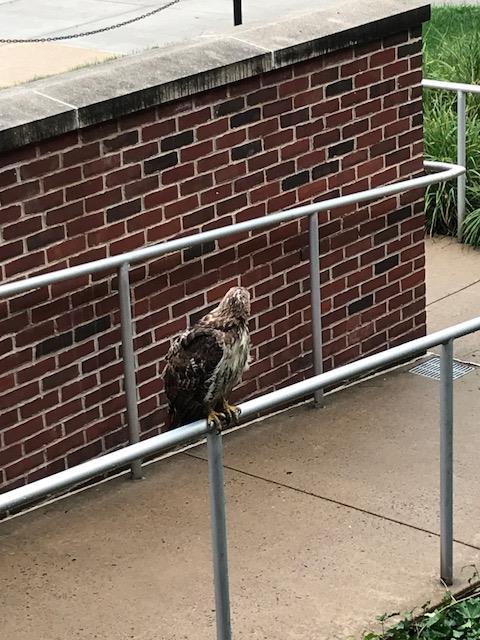
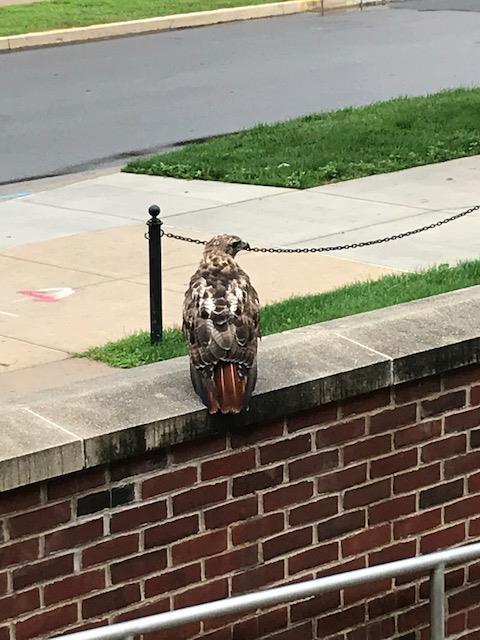
So gang, I think that we may have an issue with hawks nesting near the Shields Building here at University Park. You can read about our previous adventures with hawks (aka, Iowa's mascot) here.

As I was walking into the office yesterday morning, I noticed a couple of students on the sidewalk gawking and taking pictures of something in the grass. Naturally, my attention was drawn there...
[click any image to embiggen it]

Yes, that is a hawk that is clearly being interrupted during his breakfast (or perhaps a morning snack) of a small bunny rabbit.

If you've ever been on a suburban-to-rural college campus, you'll know that the small woodland creatures that make campus their home eventually become relatively tame. Squirrels are notorious for this here at Penn State's University Park campus. Once the work day started, a group of us were discussing the bird in a meeting. Someone raised the point that it is surprising that we don't see more birds like this swooping in and scooping up rabbits and squirrels on Old Main lawn (and elsewhere on campus). I think that's a great point!

Animal control and our Office of Plant Operations have been notified. But, I have to say, I think that it's pretty cool that we have a bird-of-prey that has taken up a home nearby. It's almost like it wants to be a normal part of the campus community...

Read More …

Categories: ,


#TNHTW. Love it.

Recently our Executive Director shot an email out to the staff that included a link to this post at the Georgia Tech Admissions blog. Totally worth your time, especially if you’re an Admissions Dude like me. My favorite part though:

Appealing an admission decision

“My son is amazing! Didn’t you see his test scores? And we know someone who got in who is not as good. How do we appeal?” Well… first, it’s very nice to talk to you ma’am. Not being admitted to a school that you really want to attend stings. There is just no easy way to say it. And at most selective schools, denied and waitlisted students can easily make a case for why they would be great students on campus. However, applications have been read multiple times in a holistic process and ultimately are made in line with achieving institutional priorities. I see how you could read that as the party line but it’s actually just confidence in our decisions.

A couple of things to know here: first, we want to talk to the applicant in these cases. Not someone who does a good voice imitation of the student, and not someone who really loves the student. Honestly, our first thought when we speak to a parent or connected alum about an appeals is, “does the student really want to come?” If so, it seems like they’d be the one to pick up the phone, send the email, or complete the appeal form.

Second, we explain on our website what makes a valid appeal. It varies from school to school, so check their information. Our reasons for a valid appeal normally include medical information, significant life circumstances, or academic details that were not correct on the transcript initially. We also list some of the invalid reasons for appeal. You’ll notice among others that pictures as an infant on campus, a really strong desire to come, or “it’s the only school I applied to” don’t fall into the valid category. #TNHIW

I could go on about how score ranges don’t guarantee admission or how we don’t have quotas of admits by school, or how the recruited athlete didn’t really take your spot, or the fact that deadline really means deadline, or how remnant shampoo doesn’t really wash your body, but I think we’re on the same page now, right?

My emphases.

Good grief, I just want to HUG the person/team that wrote this post.

As an admissions professional, this is something with which I struggle nearly every day; at what point do I drop the notion of being friendly with our “customers” (students and their families), and start getting real? The issue with which we are faced is explaining to students (read: parents) why the admission decision they received is not necessarily that which they wanted.

The applicant to Penn State that pens an appeal letter arguing that they should be admitted because they have been season ticket holders for the football program since 1986 when D.J. Dozier led the Nittany Lions to a national championship should not get a second glance. Never mind that any applicant making that argument had not yet been born in 1986. And yet, when that appeal arrives on my desk (or one of my colleague's desks), I am obligated to investigate the student’s record. And respond.

About 18 months ago I attended the College Board Forum in New York City. While I was there, I had an enlightening conversation with a colleague from Columbia University. She said that Columbia does not entertain appeals. The decision you get, is your decision. Final decision. Period. End of story.

I suppose that I should look at it from a student-centric point-of-view: our process of appealing an admission decision helps students to find the right fit for them, even if there is a lot of blood, sweat & tears in the process.

Read More …

Guys, you need to pick up your bird.

So this morning I was walking into the Undergraduate Admissions Office here at Penn State, and I saw a colleague standing on the steps with her cell phone pointed towards the flowers beside the building. “Ingrid”, I said, “what are you taking a picture of?”

Then I looked where she was pointing her phone:

That is one serious bird!
Read More …

Categories: , , ,

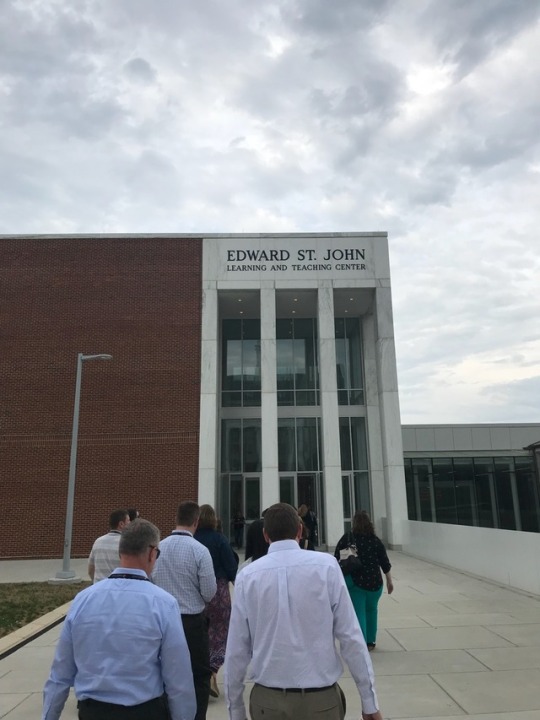
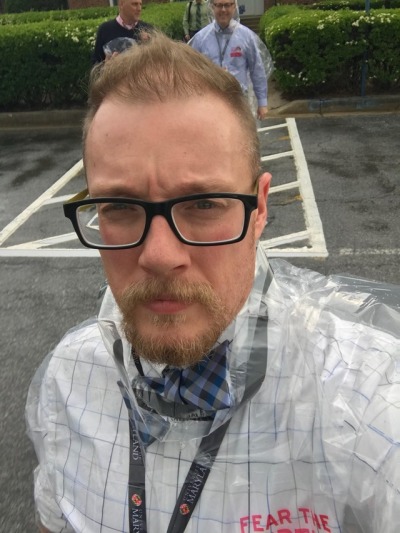
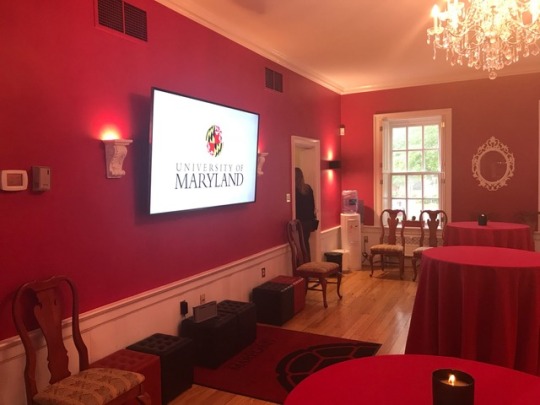
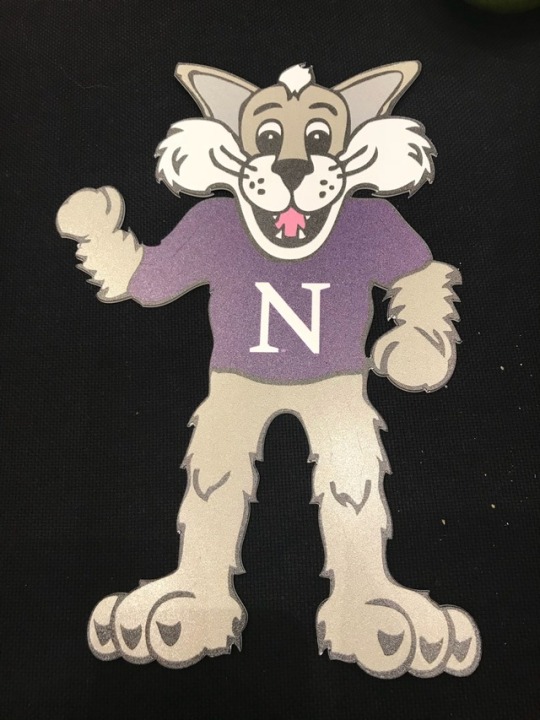
It’s been great to be a Terp for the last few days! The University of Maryland staff have been fantastic hosts, and I’m really looking forward to seeing Northwestern next year!

(But, it will be nice to be back HOME in Happy Valley!)

Read More …

Categories: , , ,

For months, I have been working on the LionPATH project for Penn State. This is the enterprise student system that will be replacing the legacy system that the University has used for more than 30 years.

LionPATH went live in mid-August, which was an achievement for sure, but initially we were only collecting applicant data. We hit a major milestone last week when we produced the first admission decisions in the new system:

That’s the first pile of offers of admission to Penn State.

That is my fantastic colleague Caley, modeling the very first offer of admission latter that was produced from the system.

“So what?” you say? “What’s the big deal?”

The project has been going on for nearly two years (even though I joined up a couple of months ago), and it has taken lots of great folks a LOT of hard work to get this thing up and running.

So, this is merely a self-congratulatory post because I think that it is pretty friggin’ awesome that this thing works – and works well (so far)!

Read More …

Categories: ,